Why I picked this box
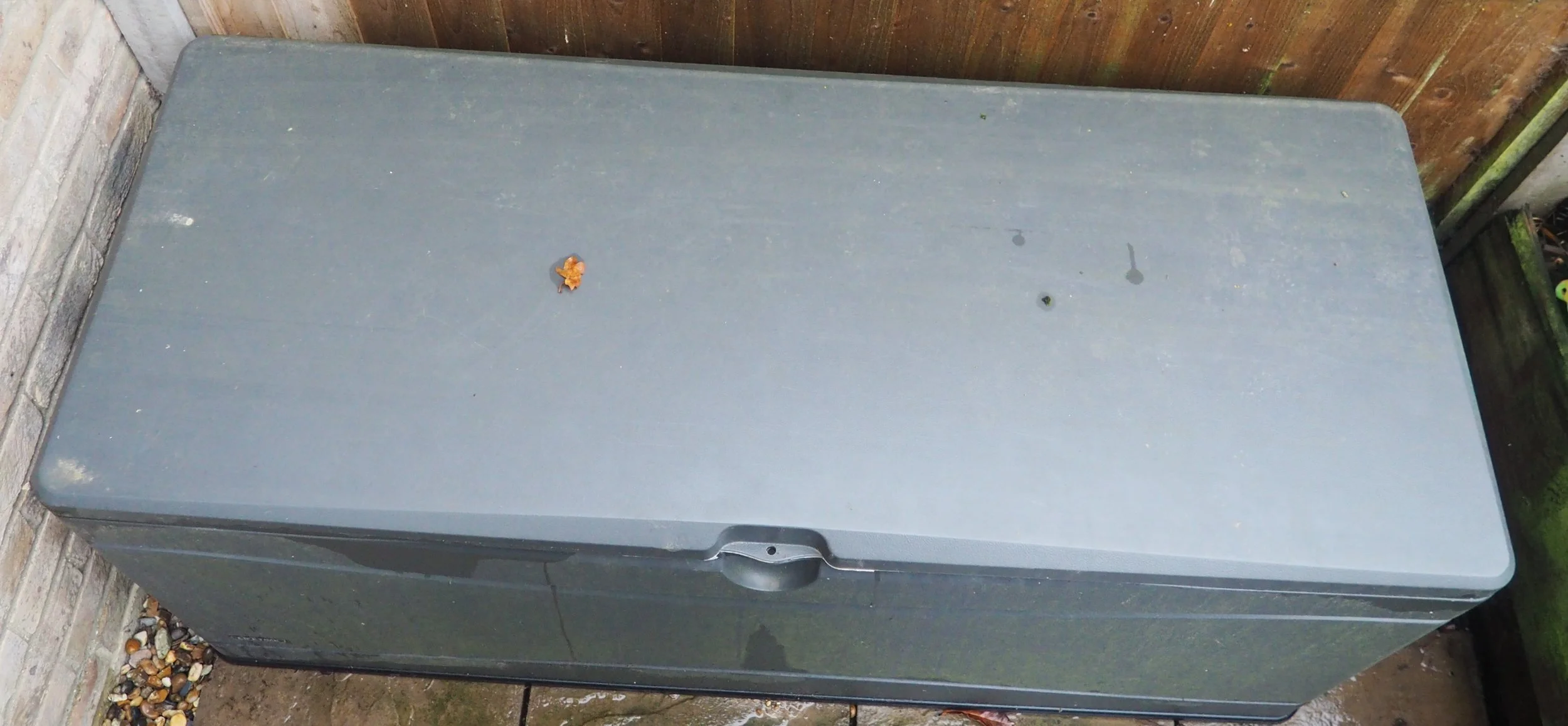
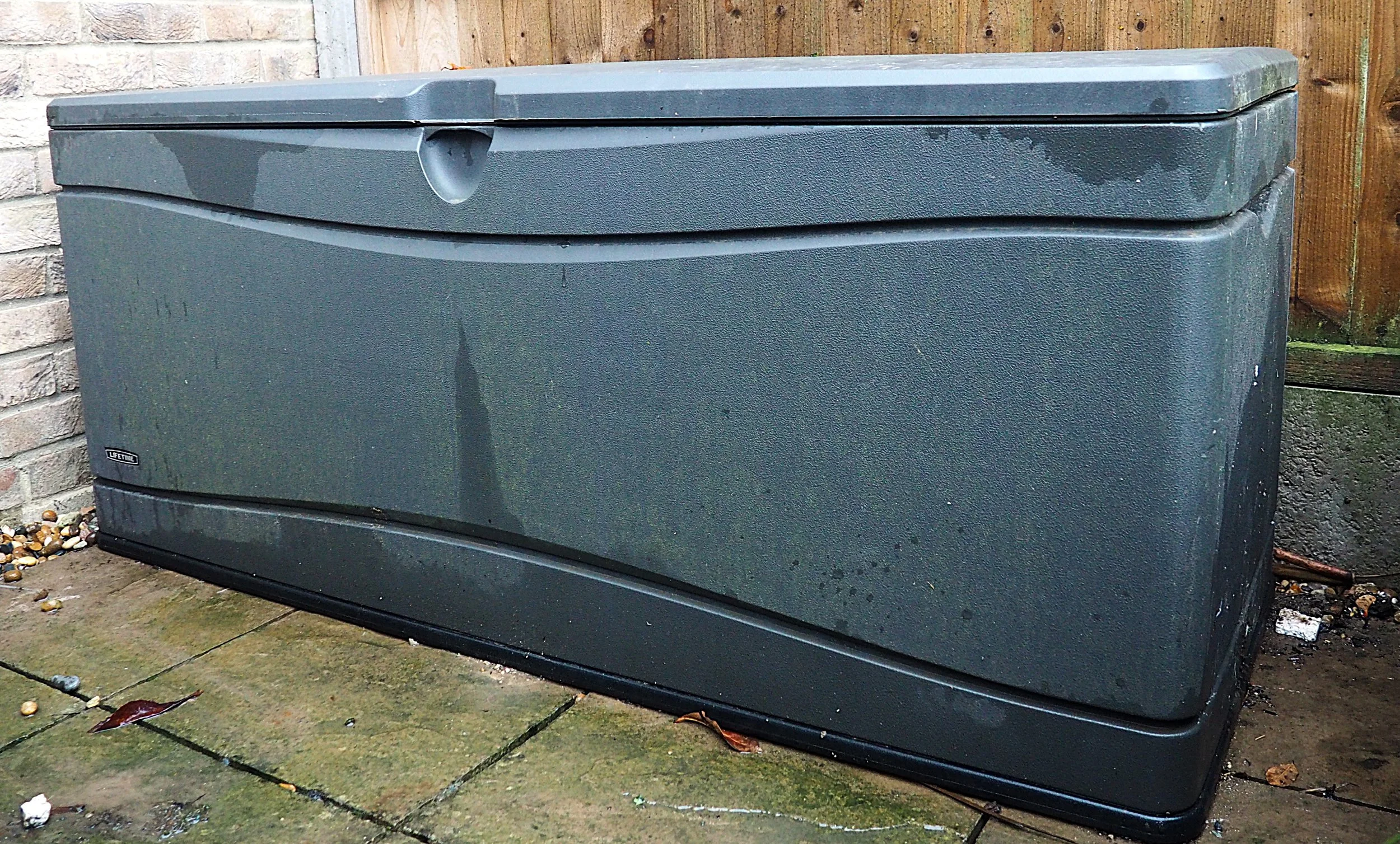
Four years ago I bought an outdoor storage box for garden equipment, and I chose it on one criterion before price, size or looks: what it is made of. The Lifetime 500l Large Cushion Box Dark Grey is moulded from HDPE, and that is the reason it has spent four English winters on my patio instead of in the shed. It has held up well, and this post explains why.
Outdoor products fail in boring ways. The plastic goes chalky, cracks at the corners, warps in the sun or turns brittle in frost. "Weatherproof" on the label tells you nothing about why, so I would rather look at the material than the marketing.
This post covers what HDPE is, why it copes with weather, and where it doesn't. It is written from an engineer's point of view, for someone choosing a consumer product rather than specifying an industrial one.
What HDPE actually is
High-density polyethylene is the same polymer family as carrier bags and cling film, arranged very differently. HDPE's polymer chains pack tightly together. That tighter structure makes it stronger, stiffer and more resistant to moisture than many common plastics. The result is a density of roughly 0.94 to 0.97 g/cm³, which is why HDPE floats on water.
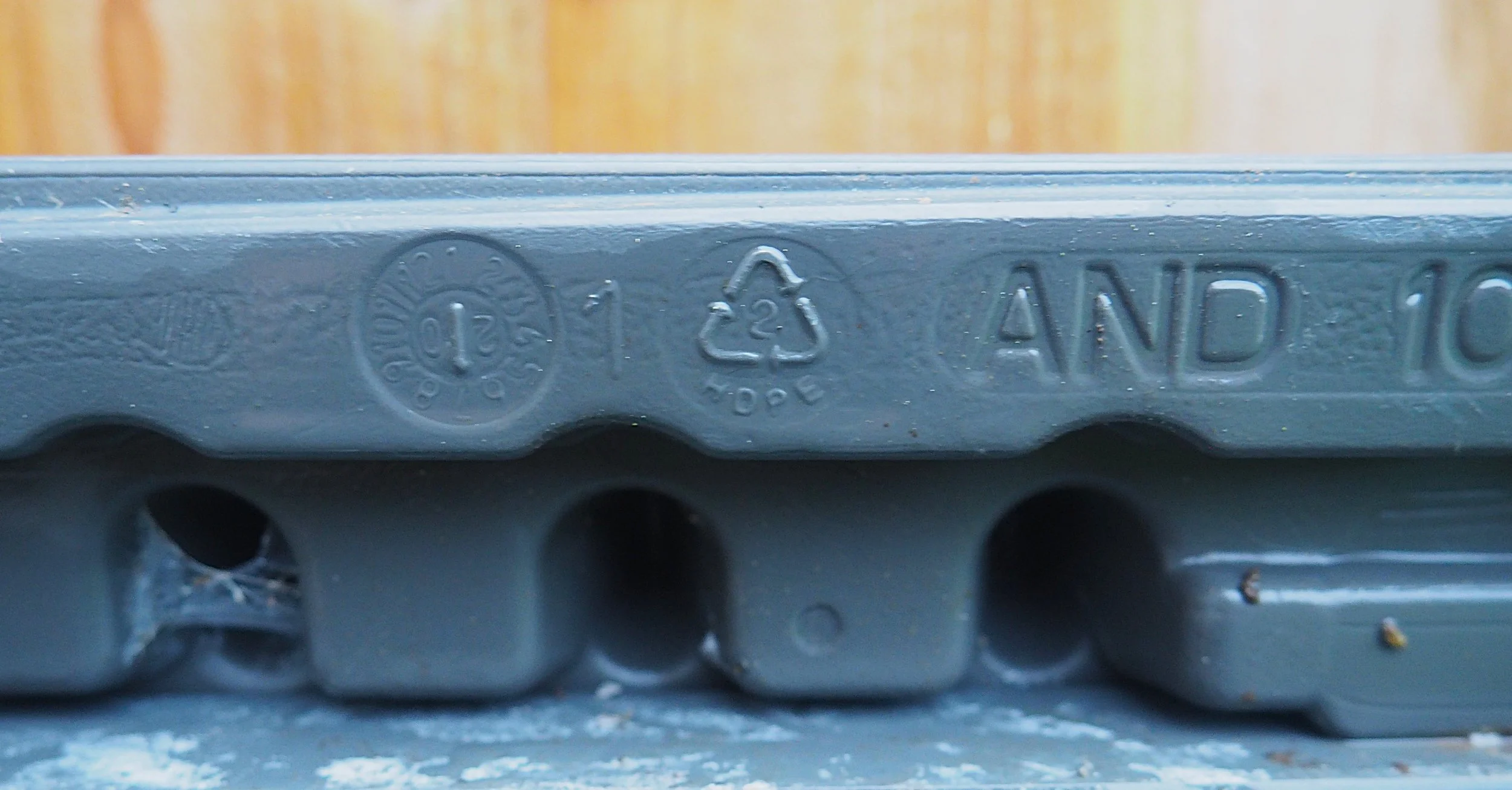
That tight packing is behind most of what matters outdoors. It makes the material stiffer and stronger than low-density polyethylene, it makes it hard for water and chemicals to get in, and it gives a melting point of around 130 °C. It is also recycling code 2, which matters when the box eventually reaches the end of its life.
UV is the real enemy
Rain does not kill outdoor plastic. Sunlight does. Ultraviolet radiation breaks the polymer chains (photo-oxidation), and the symptoms arrive in a predictable order: fading, a chalky surface, fine cracking, then lost impact strength.
So the honest claim is not "HDPE is UV-proof". It is "HDPE with the right additives is UV-resistant". Two do most of the work:
Carbon black. It absorbs UV before it reaches the polymer. A couple of per cent by weight is typical, and it is why black pipes, bins and water tanks last decades outdoors.
HALS (hindered amine light stabilisers). They mop up the free radicals that drive the degradation. This is what coloured and grey products rely on, usually alongside UV-absorbing pigments.
The practical consequence is that the same polymer can give very different lifespans depending on the additive package. A dark box is the safer bet. A pale one can be fine, but only if the maker has actually stabilised it.
Water, frost and chemicals
HDPE absorbs almost no water, typically a hundredth of a per cent or less by weight. It cannot rust, rot, swell or delaminate, which rules out the usual failures of wood, MDF, plywood and unprotected steel.
Frost is a non-event for the same reason. There is no absorbed moisture inside the wall to freeze and expand, so freeze-thaw cycling has nothing to work on. A puddle of ice on the lid does no harm.
Chemical resistance is also good. Road salt, bird droppings, fertiliser, bleach, acids and alkalis all leave it alone at normal temperatures. The exceptions are petrol, oils and other hydrocarbon solvents, which can soften and swell it, so don't treat the box as a fuel store.
Impact and temperature
HDPE is ductile. Hit it hard and it dents or flexes rather than shattering, and it stays tough well below −40 °C. A British winter never gets near the point where it turns brittle.
That cold performance is the main reason to prefer it over polypropylene, the usual alternative. Polypropylene is stiffer and often cheaper, but homopolymer grades get brittle around freezing, and a cold lid dropped on a patio is how you end up with a cracked corner. Copolymer grades are better, but you have to know which one you are buying.
Heat is the other end of the range. Under load, HDPE starts to soften somewhere around 60 to 80 °C depending on grade. A dark box in full summer sun gets hot to the touch, but a UK summer stays comfortably short of that.
Where HDPE isn't perfect
No material is, and a post that only praises one is a brochure.
Creep. HDPE is a thermoplastic, so under sustained load it slowly deforms. A lid that carries weight for years can bow. Good designs fight this with ribs and wall thickness rather than relying on the material.
Thermal expansion. It expands roughly ten times as much as steel. A one-metre panel grows around 3 mm over a 20 °C swing, which is why lids fit loosely and hinges have some slop. Rigid fixings across a large moulding are a design fault.
Environmental stress cracking. Under constant stress, contact with detergents and similar surfactants can crack HDPE without any visible warning. High-grade materials resist it, cheap ones less so.
It is soft. It scratches easily. The damage is cosmetic, but it won't stay showroom-fresh.
It resists glue and paint. The low surface energy that repels chemicals also repels adhesives. Repairs are done by welding, and fitting accessories means mechanical fixings.
| Material | UV Resistance | Frost Resistance | Water Resistance | Overall |
|---|---|---|---|---|
| HDPE | Excellent* | Excellent | Excellent | Best choice |
| Polypropylene | Good | Fair | Excellent | Acceptable |
| Wood | Good | Good | Poor | Maintenance needed |
| Steel | Excellent | Excellent | Poor | Rust risk |
*When UV stabilised.
What to look for when buying
The polymer name is only the starting point. These are the checks that separate a box that lasts from one that doesn't.
It says HDPE. "Heavy-duty resin" or "durable plastic" is a red flag. Look for the name or the recycling code 2 moulded into the base.
UV stabilisation is stated. If the maker doesn't mention it, assume the worst. Dark colours are the lower-risk choice.
How it was moulded. Rotational moulding gives fairly even walls. Blow moulding is cheaper and is usually done in HDPE, but walls tend to thin at corners and sharp radii, which is exactly where cracks start. I have seen blow-moulded and injection-moulded boxes break outdoors, so the polymer name alone is no guarantee.
Hardware. Hinges, latches and screws fail long before the body does. Look for stainless steel or a moulded-in design.
A warranty that matches the claim. A maker confident in its UV package will put a number of years in writing. Be sceptical of "weatherproof" with no warranty behind it.
Realistic expectations on sealing. HDPE doesn't leak, but a lidded box is not airtight, and condensation forms inside. Anything damp-sensitive needs a desiccant or a different home.
Verdict
For an outdoor storage box, HDPE is the right starting material, provided the moulding and UV protection are good. It shrugs off water, frost and chemicals, stays tough in the cold, and costs little to make. Its one real weakness outdoors is UV, and that is a solved problem if the maker has done the work.
That is why I chose the [brand and model] four years ago: [one line on what it has, e.g. dark moulding, stated UV stabilisation, stainless hardware, warranty length]. After four years outside it still works perfectly. A datasheet is only a prediction, and a box on a patio is the test. This one has passed.